Page name

Pharmaceutical supply chains are becoming more complex as new therapies, stricter regulations and global demand place greater pressure on how medicines are stored and moved.
What’s shifted isn’t just the challenges, but how companies approach them.
Supply chains that were once treated as a cost to manage are now seen as critical to patient delivery and business performance. The focus has moved from reducing cost to maintaining reliability, even when disruption occurs.
Operational risks & potential losses
Many risks in pharmaceutical logistics are difficult to detect in real time.
For example, a shipment may remain within the required temperature range while experiencing environmental conditions that still affect product stability. Fluctuations in humidity, small pressure changes or minor impacts during transport can damage packaging or weaken sensitive therapies.
These issues often remain invisible until the product is tested at its destination.
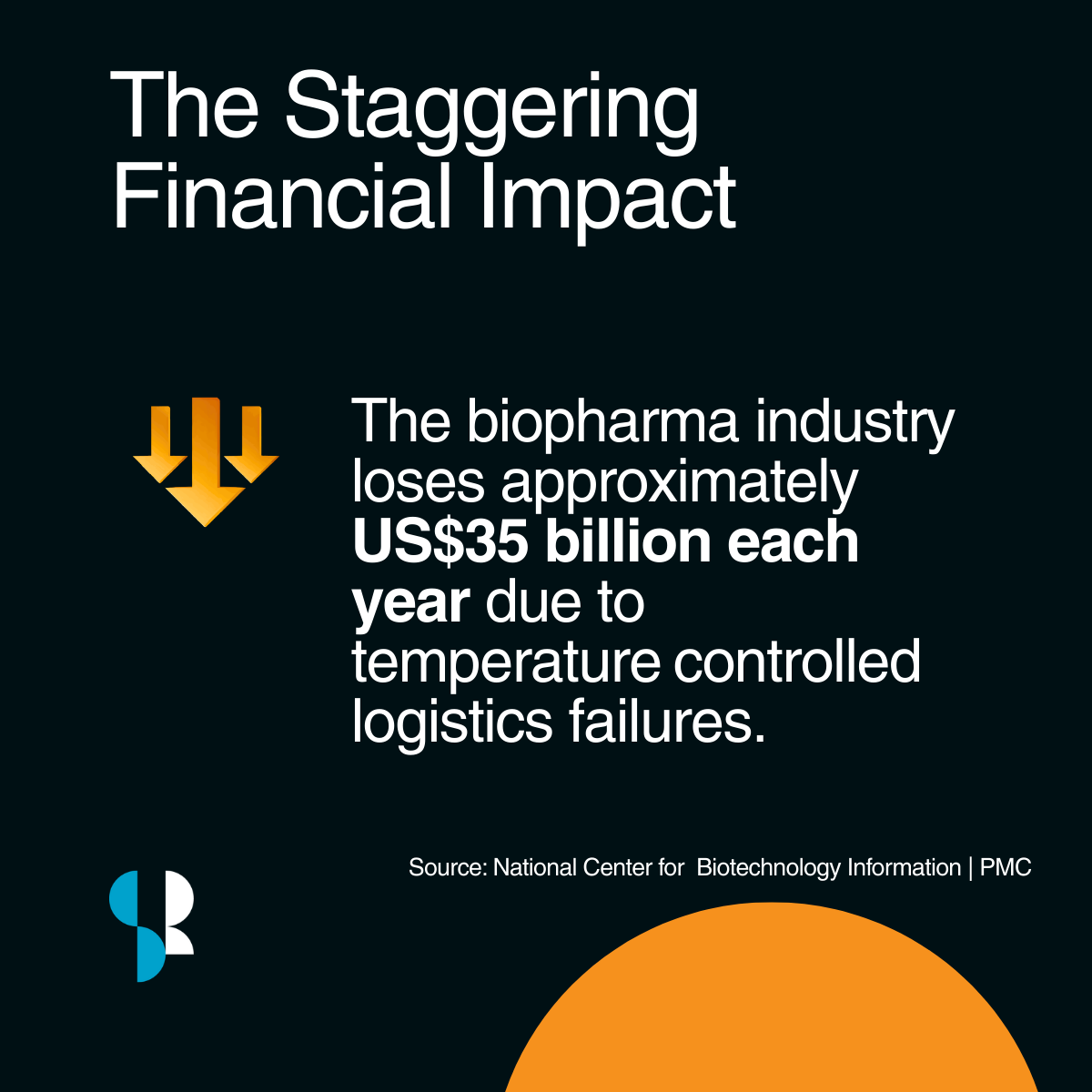
Failures in temperature-controlled logistics are estimated to cost the biopharmaceutical industry tens of billions of dollars each year, highlighting the scale of the challenge facing logistics providers.
Regulation and global disruption
These challenges are compounded by regulatory and operational constraints.
Frameworks such as Good Distribution Practice (GDP) govern how medicines must be stored, transported and monitored. Because requirements vary across countries and regions, logistics providers must manage different documentation standards, compliance expectations and customs procedures.
At the same time, global transport networks remain vulnerable to disruption. Flight cancellations, airspace restrictions and geopolitical events can interrupt carefully planned shipping routes.
For time-sensitive therapies or clinical trial samples, even small delays can create operational risk.
In this environment, maintaining reliability becomes more difficult, but more important.
How supply chains are changing
As pharmaceutical supply chains become more complex, companies are changing how they operate.
For logistics providers, this means operating in an environment where products are more sensitive, delivery windows are tighter, and supply chains span multiple regions with different regulatory requirements.
At the same time, sustainability expectations are becoming part of how pharmaceutical companies evaluate their partners.
I explored this trend in more detail in The Race to Be More Sustainable and What It Means for Life Sciences Logistics Hiring
Next Steps for Hiring Leaders
For leaders, the return on investment often comes from preventing disruption rather than simply improving efficiency.
Strong planning, supply chain visibility and experienced teams are what prevent losses and protect client relationships.
Hiring priorities we’re seeing in the market:
- Specialist technical roles such as cold chain specialists and packaging engineers
- Operational roles with stronger compliance expertise, particularly GDP knowledge
- Greater focus on training, upskilling and retaining experienced teams
Pharmaceutical logistics is under increasing pressure from multiple directions.
For companies operating in this space, the challenge is managing these demands while maintaining reliability, compliance and client trust.
If you’re hiring within pharmaceutical logistics or temperature-controlled supply chains, connect with Adam Dowson or the Spencer Riley team to build the teams needed to support this change and deliver long-term growth.

Related Insights



Contact us today
Spencer Riley’s team of highly dedicated, specialist consultants’ pride themselves on gaining a full understanding of our client’s business,